


Efficient production lines with DC-fed conductor rail
Three-phase 400-volt AC voltage is used as standard in industry today. AC voltage is also used on production lines around the world. The number of frequency converters, including rectifiers and intermediate circuits, which are usually required for each industrial consumer, is enormous. In order to significantly reduce the number of these AC/DC converters and to utilize further advantages of direct current technology, the industry is looking for new solutions to become more efficient and sustainable.
Kamen, December 18, 2019 - In the effiDCent funding project, Paul Vahle GmbH & Co. KG and its consortium partners from research (TU Dortmund University, Ostwestfalen-Lippe University of Applied Sciences and Arts) and industry (Condensator Dominit, E-T-A Elektrotechnische Apparate GmbH) are researching a DC-fed busbar system with integrated intelligent energy storage. Condensator Dominit, E-T-A Elektrotechnische Apparate GmbH) is researching a DC-fed busbar system with integrated intelligent energy storage, central DC feed, buffer capacitors and arc monitoring, which is intended to optimize energy transmission in the production lines of the manufacturing industry.
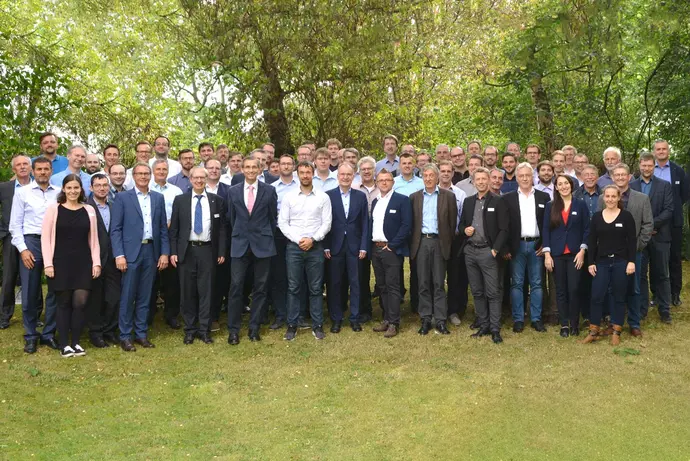
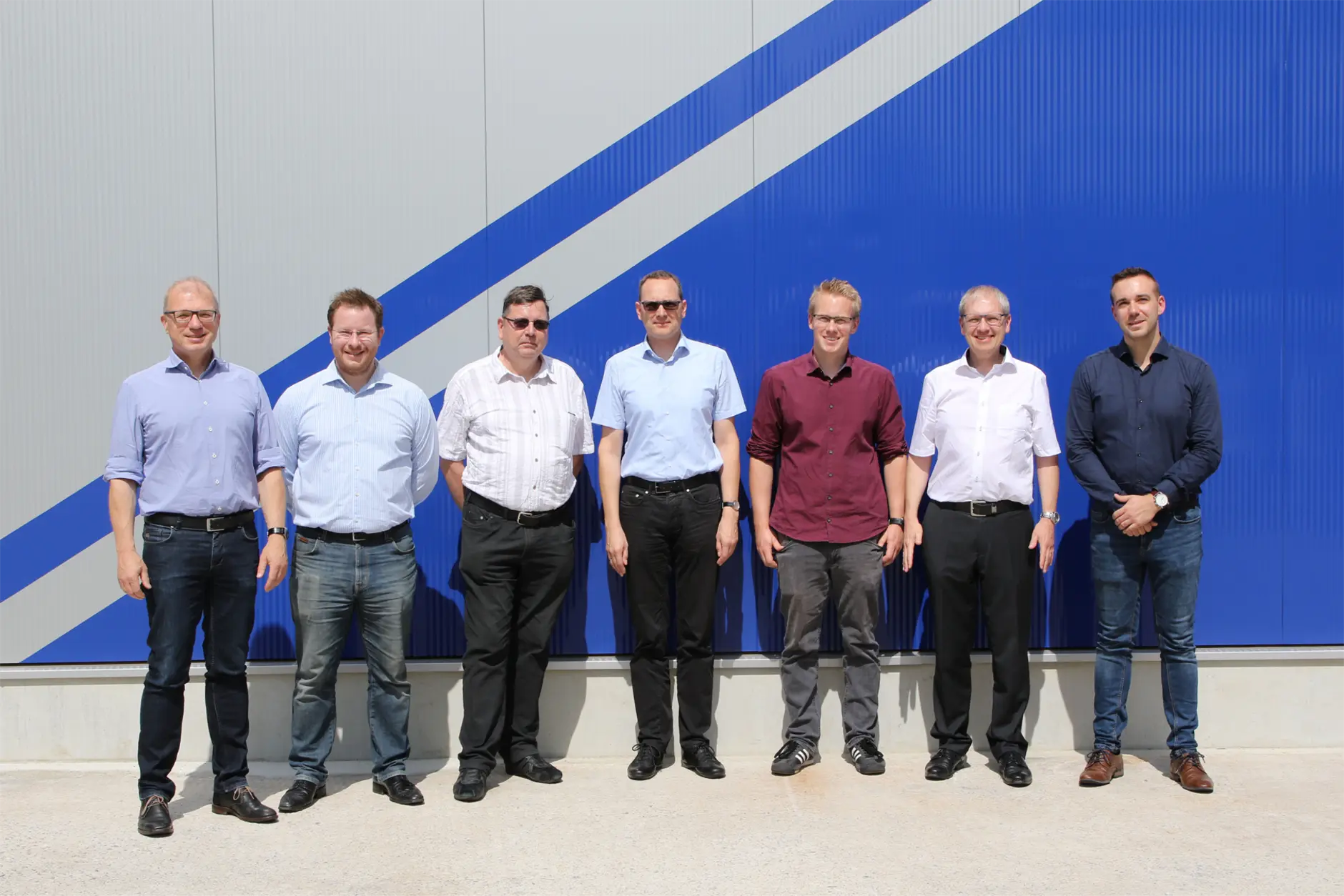
Consortium partners from research and industry in the EU-funded effiDCent project
The aim of the project, which is funded by the European Union and the state of North Rhine-Westphalia, is to increase the energy efficiency of manufacturing and production lines and minimize grid-related production downtimes, thus generating an optimal manufacturing process. Ideally, when switching from AC to DC voltage, an arrangement of buffer capacitors and intelligent energy storage systems would result in an enormous reduction in material and a change in the conductor material. The customer also saves on DC converters and capacitors. Accordingly, these are only required centrally at the stationary feed-in.
On August 7, 2019, the consortium partners met for the joint project kick-off at the VAHLE Demo Center in Kamen. The project partners used this day to get to know each other and present their individual core competencies. The project partners were also given a tour of the power transmission specialist's production facilities.
"Production lines around the world rely on alternating voltage to distribute energy," explains Marco Hermanni, project manager and coordinator at VAHLE. "The power supply to production lines via busbar systems is currently almost exclusively provided by AC voltage throughout the industry, but this has to be converted twice for each customer to the on-site conditions using DC converters and DC link capacitors."
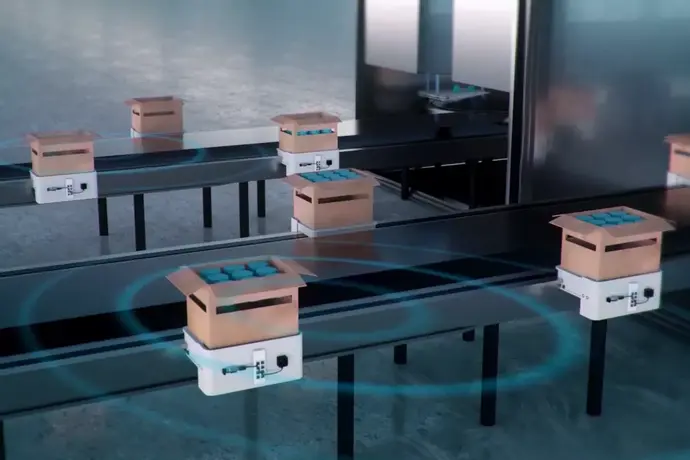
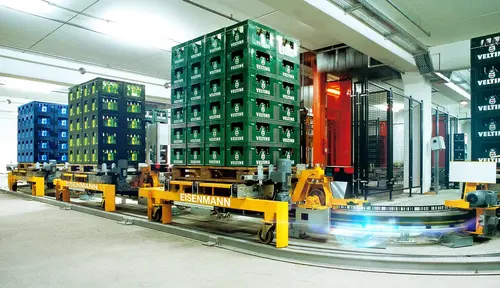
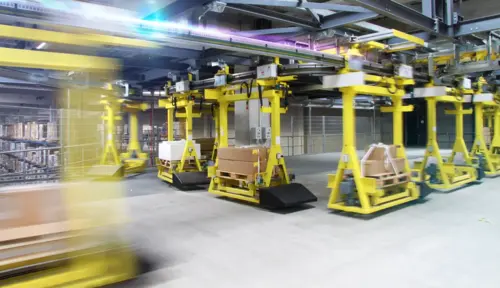
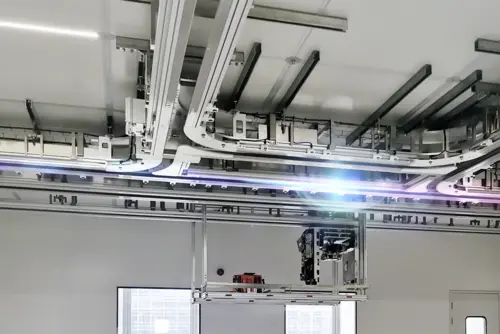
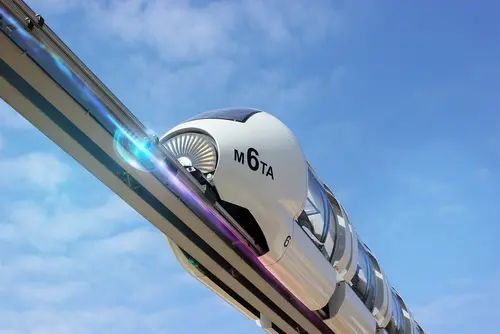
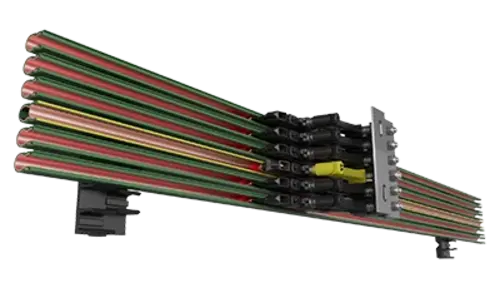
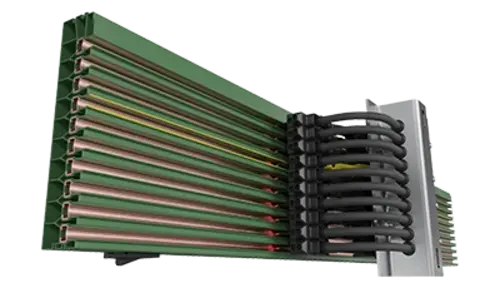
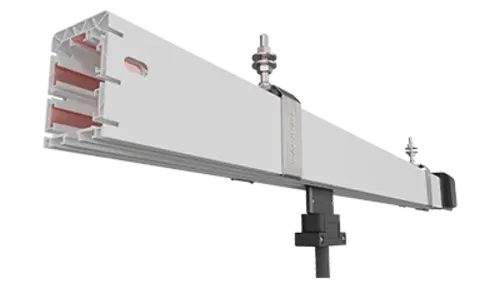
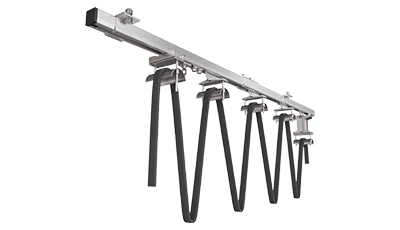
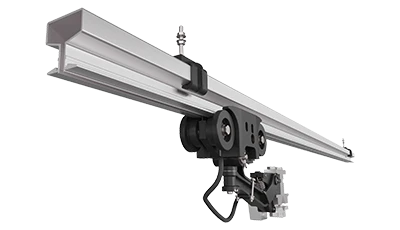
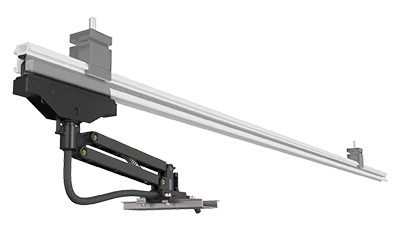
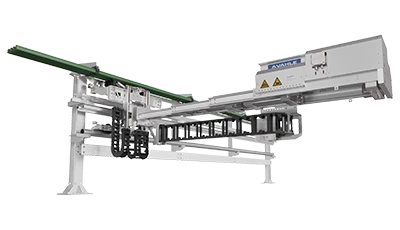
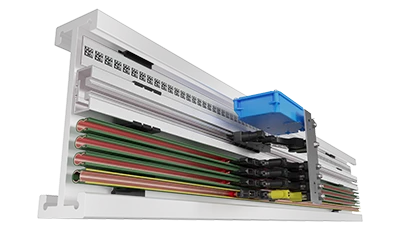
Converting the energy supply to DC voltage offers major efficiency benefits. In this project, DC-based busbars are being researched for efficient energy transmission in production lines, e.g. in the frequently used electric monorail systems. Significant innovations here would be the massive material savings of copper through direct current transmission as well as alternative conductor materials, the use of a central direct current feed with fault shutdown and the resulting reduction in the size of the converters through regulated direct voltage and arc detection. In addition, the installation of buffer capacitors along the busbar provides dynamic stability with a simultaneous reduction in overall capacity. Ultimately, the use of intelligent energy storage systems to cover the highest peaks in load requirements for a short period of time would enable even conditioning of the energy demand.
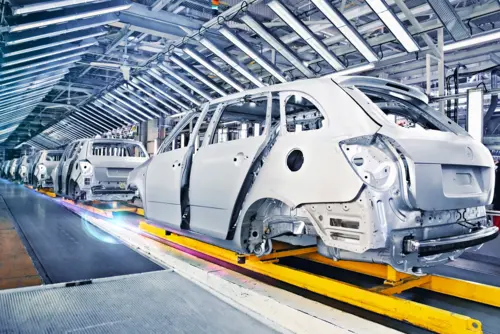
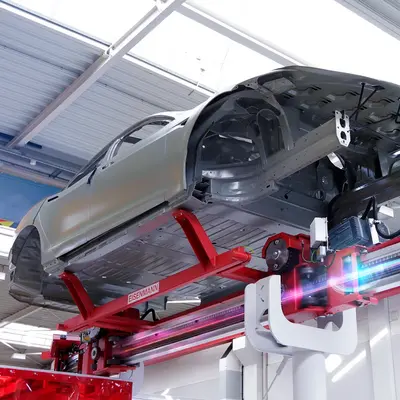
Increasing the energy efficiency of production lines in the automotive industry
The research consortium is breaking new ground with the installation of buffer capacitors along the conductor rail. Ensuring stability in particular is the greatest challenge, which requires considerable research efforts. Nevertheless, the advantages of the proposed DC-powered conductor rail system are immense. By switching from alternating current to direct current in combination with buffer capacitors, it is possible to significantly reduce the amount of copper required for the rail.
This could mean a material reduction of up to 50% combined with an increase in the efficiency of the consumers of up to 15%. In addition, the central direct current feed and the buffer capacity allow a significantly simpler design of the collectors. Furthermore, thanks to the intelligent energy storage system, the feed-in now only has to be designed for the nominal output and no longer for the peaks - the peak output. This is because production on a direct current basis proves to be more robust against fluctuations in the supply and quality of the grid.
Stable and secure grid quality and recovery of braking energy in DC operation
In addition to enormous cost efficiency, this also offers decisive advantages for the energy transition and Industry 4.0. Switching to direct current feed-in in industry would make it much easier to feed electricity from renewable sources into the grids.
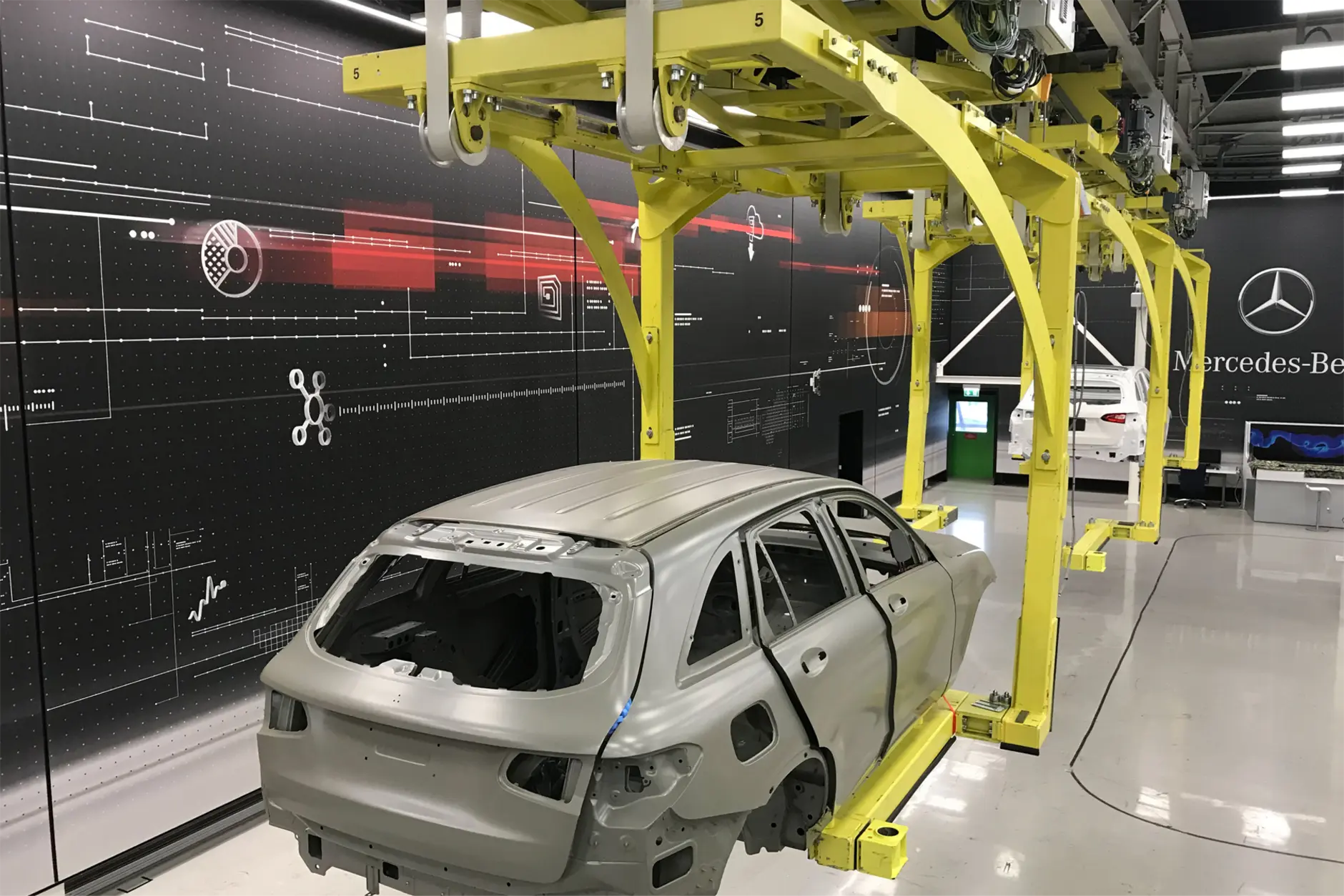
The consortium benefits from the support of Mercedes-Benz AG. The project partners can test the research results on Daimler's own test electric monorail system in Sindelfingen.
"At present, the use of alternating current means that feeding back braking energy, for example, is only possible to a limited extent or only with the use of special regenerative frequency converters. The use of direct current offers further advantages here and not only ensures stable and reliable grid quality, but also makes it easy to use braking energy. And it's not just about theory. The research results will be tested live in an electric monorail test facility at Mercedes-Benz AG in Sindelfingen," explains Marco Hermanni.
Ultimately, the consortium expects that the overall energy efficiency of an electrified monorail system can be increased by 17-25% through the proposed innovations alone, with significantly simpler and therefore more cost-effective consumers. The innovations in this project will be evaluated and finally qualified in a realistic demonstration system. This will be done in close coordination with the users, which is why it is expected that, due to the great advantages of the system, there will be excellent opportunities to exploit the project results after the project has been completed, thus strengthening the industry in NRW in the long term.
The effiDCent funding project at a glance:
- Main focus of the research project: Development of a DC-fed conductor rail for industrial production lines
- Project partners: Paul Vahle GmbH & Co KG (consortium leader), Dortmund University of Technology, Ostwestfalen-Lippe University of Applied Sciences and Arts, Condensator Dominit and E-T-A Elektrotechnische Apparate GmbH as an associated partner.
- Project duration: July 2019 - June 2022
- Project sponsor is the Research Center Jülich PTJ.
- Electric monorail test facility at the Mercedes-Benz plant in Sindelfingen
- This project is funded by the European Union and the state of North Rhine-Westphalia.