




VAHLE is an associated partner in the DC-INDUSTRIE2 funding project
"Direct current for the factory of the future" - with this guiding principle, the "DC-INDUSTRIE2" research project was launched on October 1, 2019 to investigate the potential of direct current technology for industrial production facilities. DC-INDUSTRIE2 follows on directly from the highly successful DC-INDUSTRIE research project, which focused on the development, adaptation and testing of power electronic devices for the supply and protection of DC grids in production cells as well as methods for their robust operational management.
"Direct current for the factory of the future" - with this guiding principle, the "DC-INDUSTRIE2" research project was launched on October 1, 2019 to investigate the potential of direct current technology for industrial production facilities. DC-INDUSTRIE2 directly follows on from the highly successful DC-INDUSTRIE research project, which focused on the development, adaptation and testing of power electronic devices for the supply and protection of DC grids in production cells as well as methods for their robust operational management. In phase 2, the DC grid is to be expanded into an intelligent DC grid for a production hall or a large-scale process plant.
"DC technology has many advantages that can be used to meet the requirements of a modern, intelligent industrial power supply grid. For example, new energy generation systems such as photovoltaics or energy storage systems can be integrated very easily, as they generate a DC voltage anyway. System availability also increases, as a DC grid can react flexibly to faults in the upstream AC supply grid. "A DC grid can even actively support the AC grid; this grid serviceability is particularly important in weak grids or with a high proportion of decentralized energy generators such as photovoltaics," reports Prof. Dr. Holger Borcherding (TH OWL), the scientific director of DC-INDUSTRIE2.
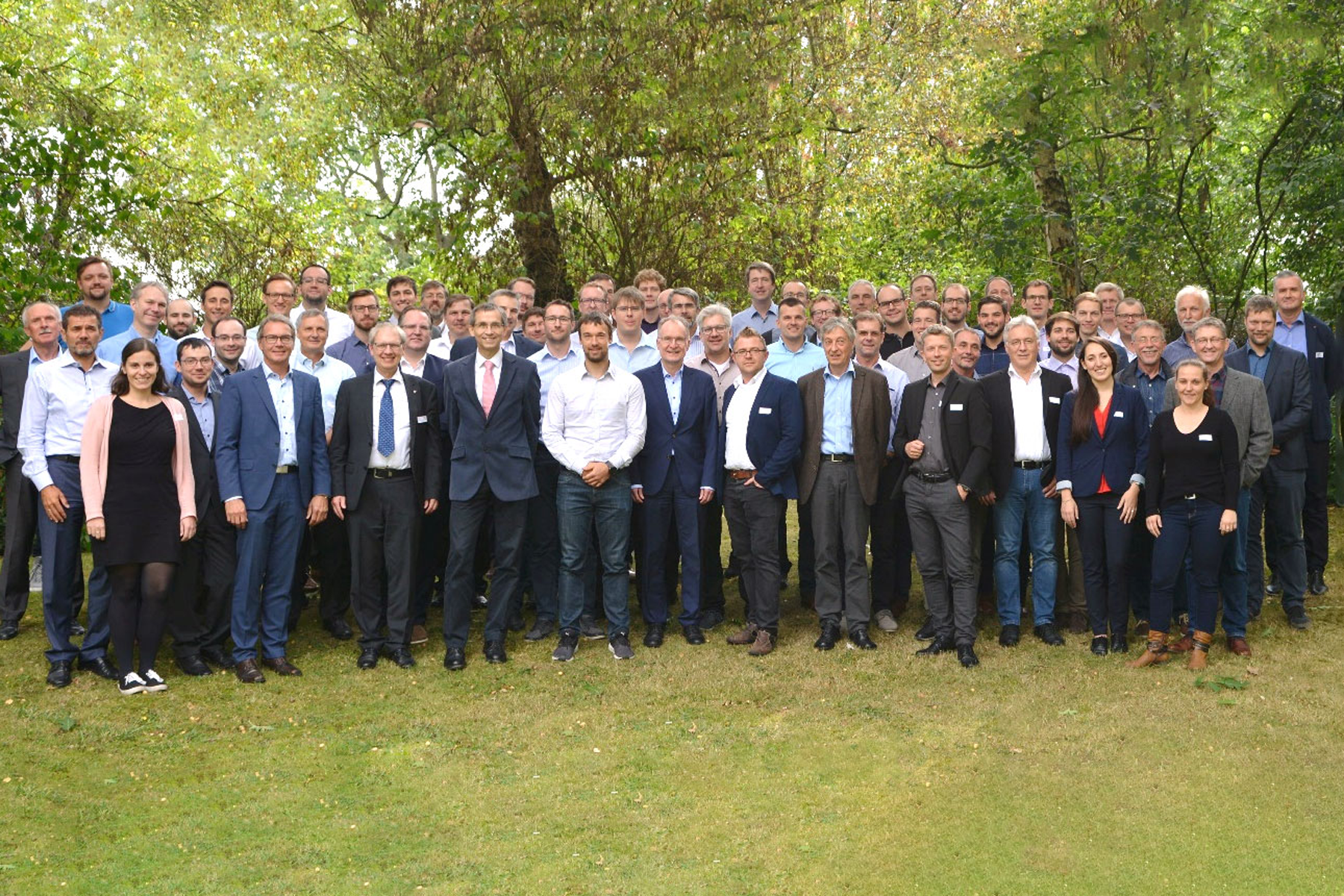
In terms of content, the project builds on the results of DC-INDUSTRIE. A comprehensive system concept has already been developed here, which is now to be expanded for larger systems. "Openness and simplicity are particularly important to us. This was also the key to success in the previous project. We want everyone to benefit from the results," says Dr. Hartwig Stammberger (Eaton Industries GmbH), the overall project manager. With 35 industrial partners, 5 research institutes and the ZVEI (German Electrical and Electronic Manufacturers' Association), which supports the project with an industry working group as part of its association activities, DC-INDUSTRIE2 is one of the largest collaborative research projects in Germany. The consortium would particularly like to thank the Federal Ministry for Economic Affairs and Energy, which is funding DC-INDUSTRIE2 as part of the 7th Energy Research Program under the funding numbers 03EI6002A-Q, as well as Project Management Jülich for the content and administrative support of the 18 funded partners.
The 13 industrial partners BLOCK, BMW, Daimler, Eaton, E-T-A, HOMAG, KEB Automation, LAPP, Lenze, LTI Motion, Phoenix Contact, SMA Solar Technology, Weidmüller, together with the 5 research institutes Technische Hochschule Ostwestfalen-Lippe, Technische Universität Braunschweig, Fraunhofer IPA, Fraunhofer IISB, University of Stuttgart and the 22 associated partners ABB, AMK, Audi, Bauer Gear Motor, Bender, Danfoss, Dehn, ESR Pollmeier, Gerotor, Harting, JEAN MÜLLER, KUKA Deutschland, KUKA Systems, LEONI Kabel, LEONI Special Cables, Maschinenfabrik Reinhausen, Paul Vahle, Puls, Rittal, SEW-PowerSystems, Siemens and Wöhner will be researching the industrial DC grid of the future.
Further information on industrial DC grids can be found at www.dc-industrie.de.
The VAHLE Group is an associated partner in the DC-INDUSTRIE2 funding project and is specifying products for a technology change and its future market requirements.
The system solutions are being developed in our own research department to meet the corresponding DC requirements and are subject to strict test procedures.
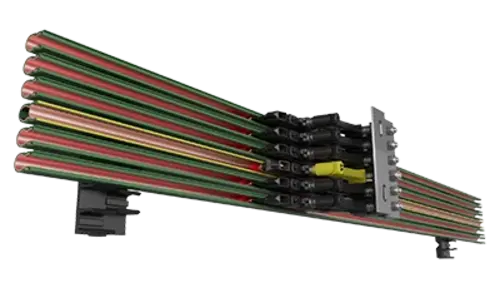
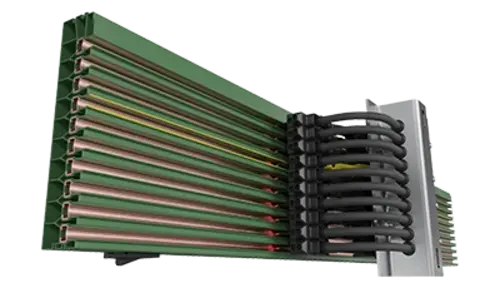
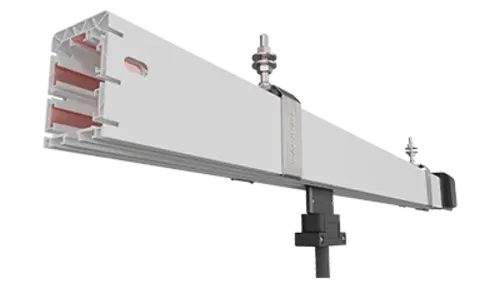
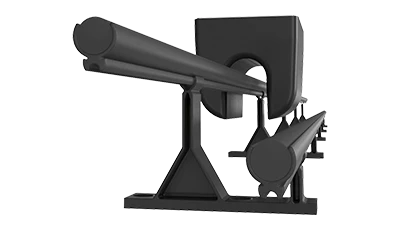
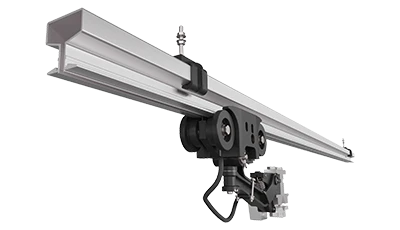
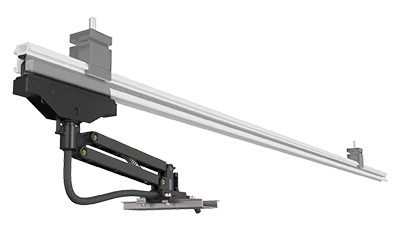
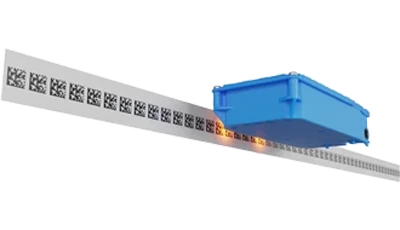
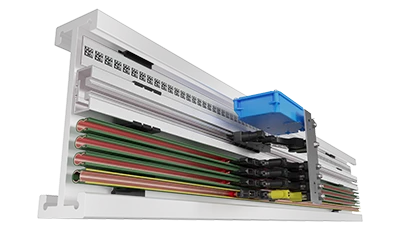
In addition, VAHLE will equip a test facility at a well-known automobile manufacturer with the individually insulated U10 busbar system and the SMGM data transmission system. Special attention will be paid to the future monitoring and measuring technology in our conductor rail systems. We look forward to working with our partners on this forward-looking project. At the same time, VAHLE is the consortium leader in the EU-funded effiDCent project.
In the effiDCent funding project, Paul Vahle GmbH & Co. KG, together with the consortium partners from research and industry, is researching a DC-fed conductor rail system with integrated intelligent energy storage, central DC feed, buffer capacitors and arc monitoring, which is intended to optimize energy transmission in the production lines of the manufacturing industry.